Skip to content
Protective coatings have always been passive barriers. Tough, durable, and reliable — but fundamentally unable to communicate what’s happening beneath the surface. A January 2026 study published in the KeAi journal Advanced Nanocomposites could change that equation entirely. Researchers at Shenyang Aerospace University have developed a spray-applied polyurea nanocomposite coating reinforced with functionalized graphene that doesn’t just shield structures from impact, corrosion, and weathering. It detects strain and damage in real time.
For industries that already depend on polyurea membranes for critical asset protection, the implications are hard to overstate. The same coating that absorbs a blow can now report it.
How the Coating Works
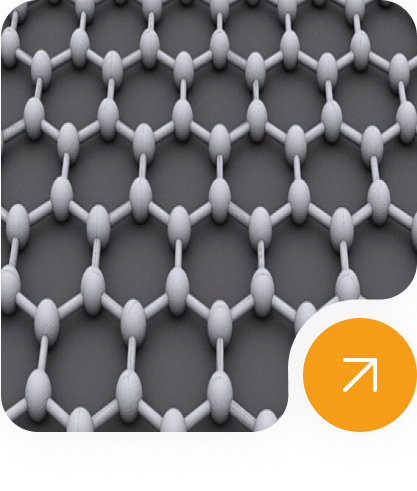
The technology centers on graphene nanoplatelets that have been covalently functionalized with a hexamethylene diisocyanate (HDIT) trimer. That molecular modification is the linchpin. Without it, graphene fillers agglomerate during the rapid spray gelation process that defines polyurea application — clumping into useless clusters instead of dispersing through the polymer matrix.
HDIT functionalization solves this by forging chemical anchor points between the graphene and the polyurea backbone. The nanoplatelets don’t just sit inside the cured membrane like inert particles. They become chemically stitched into the hydrogen-bonded microstructure. The outcome: a stable conductive network that forms at a low percolation threshold, even under the extremely fast cure times — gel in seconds, tack-free in minutes — that two-component spray polyurea systems demand.
When the coated surface experiences strain — from an impact event, structural shifting, thermal expansion, or mechanical loading — the distances between graphene nanoplatelets change, altering the electrical resistance of the conductive network. That change in resistance can be measured and mapped across the coating’s surface, providing real-time data about where strain is occurring and how severe it is.
The Performance Numbers
The mechanical and sensing performance data from the study are noteworthy, especially given that the coating was designed to be sprayed using standard two-component equipment — not fabricated under exotic laboratory conditions.
At just 0.1 vol% of functionalized graphene loading, the coating achieved a tensile strength of 43.4 MPa and an elongation at break of 707.8%. These are strong numbers by any measure. For comparison, ArmorThane’s UltraBlast — a military-grade blast mitigation polyurea with some of the industry’s highest tensile and tear strength properties — operates in a similar performance class, and that product was developed specifically for force protection applications.
The optimal balance between mechanical properties and sensing capability was found at 2 vol% graphene content. At that concentration, the coating delivered gauge factors of 8.4 at strains up to 235% and 16.0 beyond that threshold. Response and recovery times were measured at 88 and 92 milliseconds, respectively — fast enough to register impact events as they happen rather than relying on post-event inspection.
The coating also demonstrated strong durability under accelerated aging conditions, including salt-spray exposure, thermal cycling, and UV radiation — the same environmental stressors that degrade most conventional sensing equipment installed on outdoor infrastructure.
Why It Matters for Protective Coatings
The conventional approach to structural health monitoring (SHM) has always involved installing discrete sensors — strain gauges, accelerometers, fiber optic cables — onto or into monitored assets. These systems work in controlled environments. In the field? Not so much. Instruments exposed to moisture, UV cycling, chemical splash, thermal extremes, and mechanical vibration degrade faster than the structures they’re watching.
The result is a frustrating and expensive cycle. Monitoring hardware needs constant replacement. Data coverage has gaps. Asset owners spend more maintaining sensors than acting on the information those sensors provide.
A polyurea coating with built-in sensing capability sidesteps these problems entirely. The coating *is* the sensor. No separate hardware to install, weatherproof, service, or swap out. The same membrane that delivers impact resistance, waterproofing, chemical impermeability, and corrosion prevention also generates continuous strain data across every square inch of its surface. One material, two functions, one maintenance program.
This is especially relevant for applications where polyurea is already the coating of choice — bridge decks, pipeline exteriors, wastewater treatment infrastructure, secondary containment systems, blast-rated structures, and marine assets. In each of these environments, the coating must survive the same punishing conditions that destroy conventional sensors. A sensing polyurea membrane, by definition, is engineered to endure those conditions because its primary function is still protection.
What This Means for the Polyurea Industry
The protective coatings industry has long positioned polyurea as a multi-attribute solution. ArmorThane products like ArmorLiner, the HighLine series, and specialty formulations such as AquaSafe and UltraBlast already bundle impact resistance, chemical impermeability, flexibility, waterproofing, and abrasion hardiness into a single monolithic membrane — performance that traditional alternatives like epoxy, fiberglass, and sheet rubber linings simply cannot replicate.
Grafting real-time damage sensing onto that existing capability set would reshape the value proposition at a fundamental level. Asset owners who currently budget separately for protective coatings and structural monitoring hardware could collapse those into a single expenditure. The membrane protects. The membrane monitors. Two functions, one application, one maintenance calendar.
Predictive maintenance and digital twin markets have been expanding rapidly across infrastructure, energy, and transportation sectors. But the usefulness of these analytical platforms hinges on the quality and breadth of physical sensing data collected at the material level. A smart coating capable of mapping strain accumulation, flagging crack initiation, and catching impact damage across large surface areas could supply the scalable data layer that predictive models have been missing.
Where the Technology Stands Today
This research is still at the academic stage, and that distinction matters. The gap between a peer-reviewed publication and a commercially deployable product is real and nontrivial. Questions remain about the scalability of the graphene functionalization process for high-volume manufacturing, the consistency of filler dispersion through hundreds of feet of heated spray hose at production pressures, and the long-term stability of the conductive network after years of real-world service exposure.
That said, the underlying chemistry is sound. The amine-isocyanate reaction that drives polyurea gelation operates the same way regardless of the filler system — the gel time is still measured in seconds, and impingement mixing at the gun tip is still the standard application method. The research team confirmed that their nanocomposite coating was applied using conventional two-component spray equipment, which means the technology is compatible with existing application infrastructure.
For a polyurea manufacturer like ArmorThane — a company that has been formulating, manufacturing, and deploying polyurea and polyurethane coating systems for over 35 years — this type of research aligns naturally with existing capabilities. ArmorThane already produces over 50 different coating formulations across pure and hybrid chemistries, manufactures its own spray equipment including the HighLine series and PMC proportioners, and operates a global dealer and applicator network with full training and technical support infrastructure.
If sensing polyurea coatings reach commercial viability, companies with established manufacturing, formulation expertise, equipment ecosystems, and field support networks will be best positioned to bring them to market at scale.
The Bottom Line
The development of a spray-applied polyurea nanocomposite that pairs military-grade mechanical toughness with real-time strain sensing marks a meaningful advance in what protective coatings can accomplish. The technology is not yet commercially available. But the research confirms that the same chemistry platform behind today’s high-performance polyurea products can be adapted to deliver entirely new capabilities — without sacrificing the physical properties that make polyurea the preferred protective coating across dozens of industries.
As coatings technology continues to evolve, ArmorThane remains committed to the forefront of innovation in polyurea and polyurethane systems — from advanced formulations and application equipment to the professional applicators who deploy these technologies in the field every day. The future of coatings isn’t just about protection. It’s about intelligence.
To learn more about ArmorThane’s complete line of polyurea and polyurethane coating products and professional applicator programs, visit armorthane.com or contact the ArmorThane team directly.